




What’s Cooking in Your Kitchen?

Looking Beyond the Latest Trends in Healthy Fats and Oils

October 7, 2026

Energetic Health Institute

Energetic Health Institute

AT A GLANCE

  • Beef tallow and seed oils are not simply “good” or “bad.”
  • What happens before either product reaches your kitchen matters more than its label.
  • Your best choice may depend upon the product’s source, processing method, cooking temperature, and your body.

INTRO

Have you ever stared at the cooking oil aisle in a grocery store and wondered:

Which one can I trust to cook with for the people I love?

One bottle says, “Heart healthy.” Another says, “Refined.” And yet another tells you it’s “Cold-pressed.”

Then, come the social media warns…

“Seed oils are toxic!” and “Beef tallow is the traditional fat we should have never stopped using!”

Suddenly, making a choice between them seems harder than cooking the meal.

As a Certified Holistic Nutritionist and a chef, I choose my ingredients with care. I want my dishes to taste wonderful, and that means knowing where each ingredient comes from, what is in it, and how to use it in the healthiest way.

Don’t you want the same?

BEEF TALLOW OR SEED OIL

So, which should you choose? The answer is neither one is all good or all bad.

Using what I learned during my studies at the Energetic Health Institute (EHI) and some additional research, I’ll provide you with everything you’ll need to know to decide for yourself.

How does that sound?

So, before separating the heroes from the villains, let’s take a look at the facts together.

FATS HAVE A SHAPE AND THAT SHAPE MATTERS

Fats do more than add flavor and richness to our meals. They provide essential nutrients.

Beef tallow contains mostly saturated fat, while seed oils contain mostly unsaturated fat.

Saturated fats have a distinct molecular shape that keeps them solid at room temperature. Examples of saturated fats include tallow, lard, coconut and palm oils. Too much saturated fat can create acidity in the body, which can promote disease. But again, the source of those fats and your overall diet and lifestyle do matter.

Unsaturated fats have a more flexible molecular structure. They remain liquid at room temperature and are considered more alkalizing for the body.

  • Monounsaturated fats support healthy cholesterol levels. Sources of this fat include olive, canola, and avocado oils.
  • Polyunsaturated fats include omega 3 and 6. These fats support the heart and cells. Flaxseed oil is an excellent source.
Trans fats are also unsaturated. They are made by changing liquid oils into solid fats, through partial hydrogenation. These fats are primarily found in processed foods and can raise the risk of heart disease. (1)

But a fat’s molecular shape is only part of its story.
EHI was special! The Holistic Nutrition Certification got me our of my comfort zone & really helped me grow!
— Heidi S.

The Best Nutrition

Certification!

5.0

EHI was special! The Holistic Nutrition Certification got me our of my comfort zone & really helped me grow!
— Heidi S.

The Best Nutrition

Certification!

5.0

BEEF TALLOW VS. SEED OILS - WHAT HAPPENS BEFORE THEY REACH YOUR KITCHEN?

Beef tallow — once common in our grandparents’ kitchens — has become a wellness trend today.

Beef Tallow is made by heating and clarifying fat from cattle. It stays solid at room temperature and is stable for roasting and frying because it maintains its molecular structure at higher temperatures.

"An animal’s health and living conditions can greatly affect the nutrient value of the food it becomes."

It is high in saturated fat, but its primary monounsaturated fat is oleic acid (also found in olive oil). A good quality tallow can also contain linoleic acid (LA) and fat-soluble vitamins. (2)

However, not every jar of beef tallow is equal. Its quality depends on the diet, health, and living conditions of the cattle from which it is made. So, before you put that jar in your cart ask the question: Where did it come from?

THE KARMA OF MEAT

This brings me to an EHI concept called “The Karma of Meat.” (3)

When you buy an animal product, you support the industry that made it.

Cattle raised in Concentrated Animal Feeding Operations (CAFOs) face far greater stress than free-range animals. CAFO cattle have little room to move and may never see a pasture. They are also given GMO grain-based feed, growth hormones, and antibiotics.

In fact, did you know that 70% of all antibiotics and related drugs are given to livestock? (4)

Crazy, right?

And an animal’s health and living conditions can greatly affect the nutrient value of the food it becomes. Ultimately, the stress, infections, pollutants, and pHarmaceuticals to which that animal is exposed can be transmitted to you!
On the other hand, pasture-raised and grass-fed beef tend to have less total fat and may contain more omega-3s, vitamin E, beta-carotene, and other healthy nutrients.

Organic, grass-fed cattle receive non-GMO feed, pasture access, and better living conditions, without antibiotics or growth hormones.

When shopping for beef products look for verified terms such as:

  • 100% grass-fed & grass-raised
  • USDA-certified organic
  • Raised without added hormones or antibiotics
In conclusion, beef tallow can be a good choice if the animal its made from has been treated well. It also means supporting the farming system behind it.
“If you want to know the truth separating the differences between allopathic & holistic medicine such as naturopathy, homeopathy, etc., this book is a must read!” — Bonnie C.

NOT ALL SEED OILS ARE EQUAL

As with beef tallow, where seed oils come from, how they are made, and how you use them matter.

“Seed oils” include soybean, canola (rapeseed), sunflower, safflower, grapeseed, flaxseed, and others. But they are not manufactured the same way.

Some oils go through several refining steps. These steps may include chemical extraction, bleaching, and odor removal, which results in a clear, mild oil with a longer shelf life. However, this extraction process also reduces beneficial compounds and nutrients from the seeds.
Many manufacturers use hexane, a chemical made from petroleum, to extract more oil at a lower cost. Hexane residues left in the product raise important health questions.

After all, would you want a petroleum-based chemical left in the oil you cook with? I certainly wouldn’t.

Additionally, high or prolonged hexane exposure has been linked to: (5)

  • Nerve damage
  • Reproductive problems
  • Digestive issues
  • Negative health effects on the brain and nervous system

HOW THE SEED IS GROWN ALSO COUNTS

Conventional crops can be GMO and treated with chemical pesticides or weed killers.

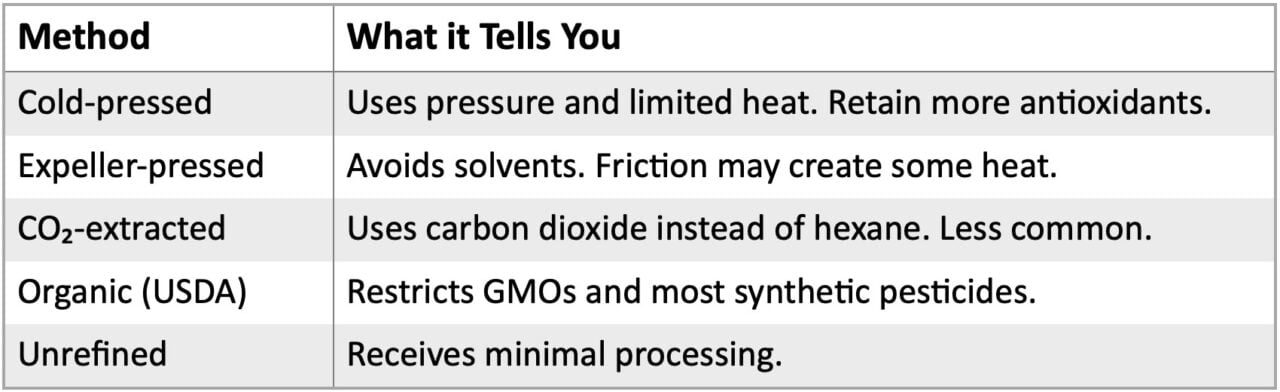
But don’t worry, there are better options made with safer practices… Seeds oils can be a great addition to a clean diet.

Here’s what to look for:
Oils are also sensitive to heat, light, and air, which can cause them to oxidize, become rancid, and taste bad.
See What Dr. H Recommends For Holy Water
Save 10% w/ Code EHI*
*Valid on All Products Except Saunas,
Air Purifiers and Red Lights.

EHI OIL INSIGHTS

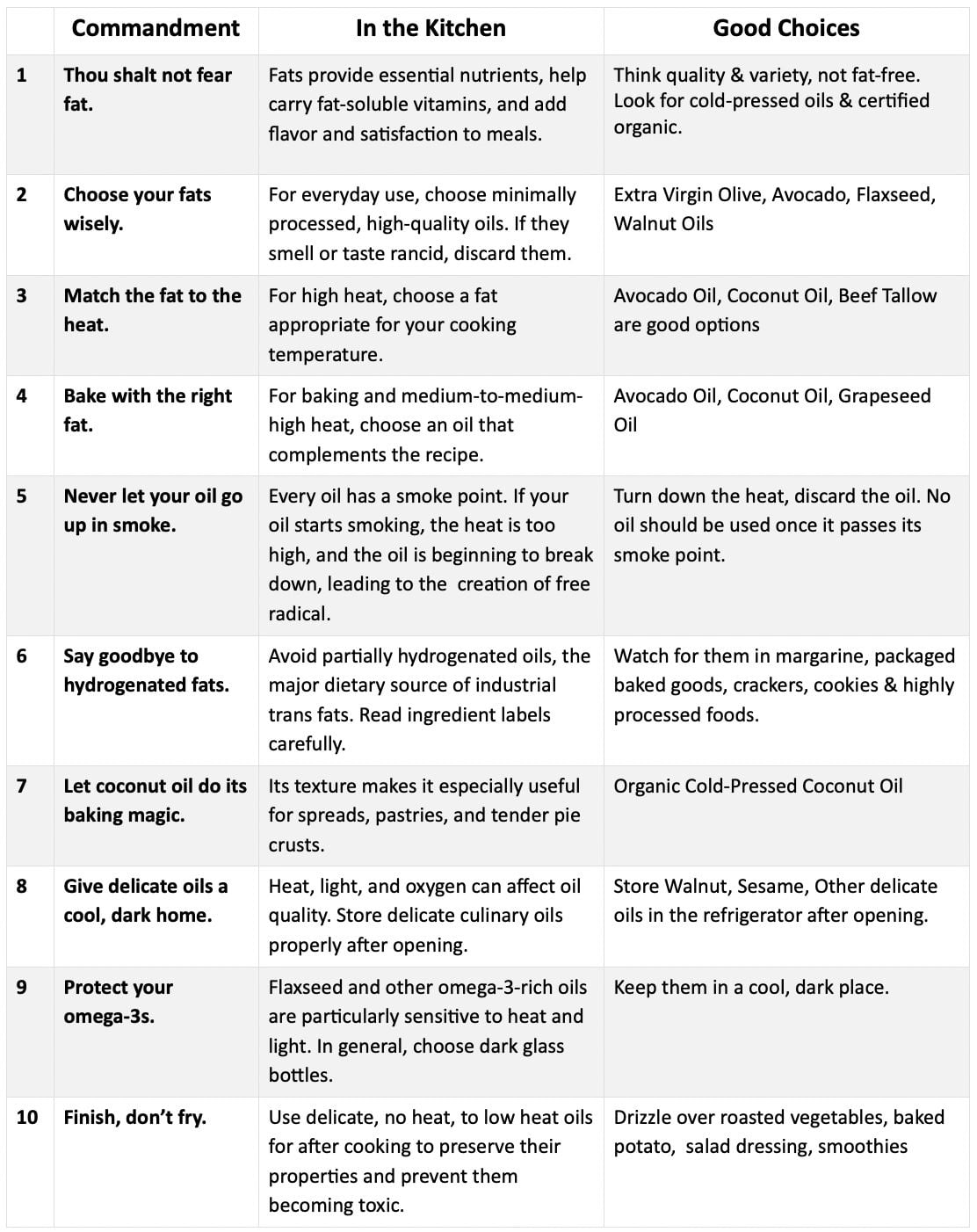
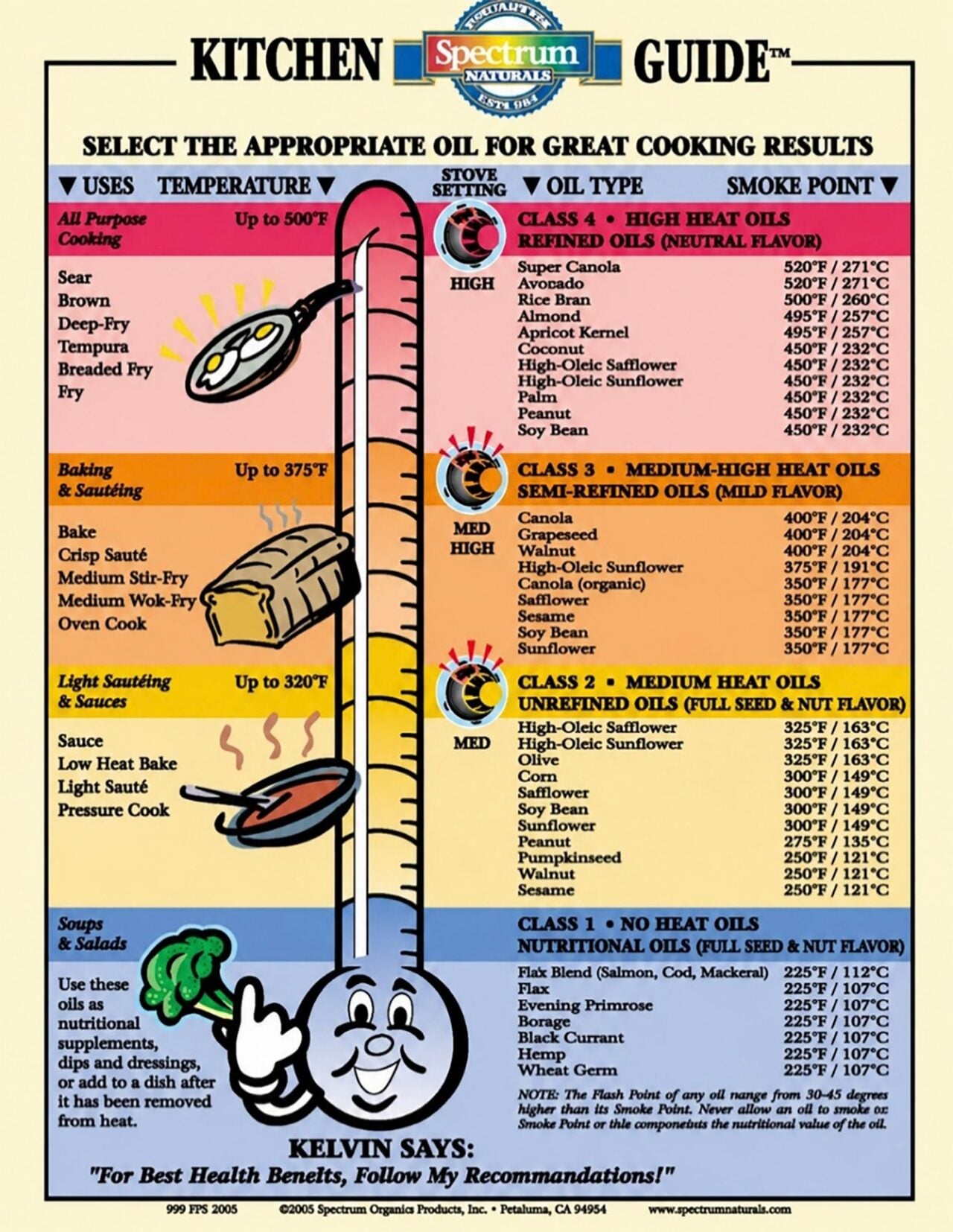
(See the EHI 10 Commandments and Kitchen Oil Temperature Guide for more details.)

  • Choose dark-colored glass bottles & store your oil in a cool, dark place.
  • Look for cold-pressed certified organic oils.
  • Match the oil to the cooking temperature. Every oil has a smoke point. If an oil heats to the point of smoking, it begins to break down and oxidize, causing it to lose nutritional value.
  • If it smells or tastes rancid, discard it.
I also follow EHI’s “Every Kitchen Needs Some Oil Goodness” recommendations and chose my own favorites:

I use extra-virgin olive or flaxseed oil for dressings, high-oleic sunflower or sesame oil for cooking at medium heat, and organic coconut oil or a quality tallow for higher temperatures.

The goal of healthy oil consumption is not to find that one “perfect” fat, but to use the right fat for the job — and for your body.

A Delayed Food Allergy Test can help you identify food sensitivities, and if you have them, you can simply avoid the fat in question.

EHI 10 Commandments

Kitchen Oil Temperature Guide

ARE YOU READY TO TURN INFORMATION INTO KNOWLEDGE?

If all the conflicting health advice online leaves you wondering what to believe, you’re not alone. It’s true, information is everywhere… But knowledge must be earned.

At the Energetic Health Institute, we’ll help you turn facts into knowledge and experience into wisdom.

Pay us a visit, attend a free class and experience all the benefits of EHI for yourself.

ABOUT THE AUTHOR

Ana Cris Rodríguez is a Certified Holistic Nutritionist (CHN) and Board-Certified Holistic Nutritionist (BCHN®) through the National Association of Nutrition Professionals (NANP). She is a proud graduate of the Energetic Health Institute (EHI) and has been a teacher for the Energetic Cleansing and Fasting Certification at EHI since 2023.
As a trained chef from the Brisbane North Institute TAFE in Australia, Ana thoughtfully blends culinary artistry with holistic nutrition. She is the founder of “Ana Cris Mindful Eating,” an organization dedicated to creating nourishing, intentional food experiences that support the body, mind, and spirit.

More Articles You'll Love

CITATIONS

DISCLAIMER & COMPLIANCE

***All Information Shared In This Article Is For Educational Purposes Only. All Statements Have Not Been Evaluated By The US Food and Drug Administration (FDA). Go Here For A Current List Of The FDA’s Position On Various Therapeutic Interventions. We Are Required To Inform You That Any Information Presented In This Article Is Not Intended To Advise, Diagnose, Treat, Cure, Or Prevent Any Disease Including COVID. Additionally, We Are Required To Inform You That Any Information Presented In This Article Is Not Intended To Constitute Legal Advice Or Service. Always Consult With Qualified Licensed Medical Professionals & Legal Experts Before Enacting Any Information Presented Herein.***

***Please Be Aware That At No Time Will EHI Offer Advice, Guidance, Or Direction With Respect To Whether Or Not An Individual Should Or Should Not Receive COVID Gene Modification Shots In Clinical Trial According To The National Institutes Of Health (NIH). We Encourage All People To Review Available Safety & Efficacy Data, Published By The CDC Through The Vaccine Adverse Events Reporting System (VAERS) And The CDC’s COVID Data Tracker, With Their Trusted Healthcare Team And Make The Decision That Is Right For Them. We Support Every Individual’s Rights As Patients To Agree To Or Decline Any Medical Procedure As Stated In The American Medical Association’s Code Of Medical Ethics 1.1.3(d).***

***In A Transparent Effort To Be In Full Compliance With The US Food and Drug Administration (FDA) and Federal Trade Commission (FTC) Regarding Prevention, Treatment, & Deceptive Practices (15 U.S. Code § 57b & Section 19 of the FTC Act), We Are Required To Notify You That The Information Presented In This Article Is A Collection Of Peer-Reviewed Empirical Evidence, But Has Not Yet Been Evaluated By The FDA For Safety & Efficacy. None Of The Information Provided Is Intended To Replace The Care And Supervision Of Qualified Licensed Medical Professionals Or The Legal Advice Of Licensed Attorneys.***

Did You Get Your Free EMF Guide?

Worried about EMFs? Don't be! Get the best sleep of your life & download your FREE EMF Guide today!

EMF Guide Download