


An Herb You Should Meet – Chamomile

An Herb You Should Meet – Chamomile

An Herb You Should Meet – Chamomile

Article in a Nutshell

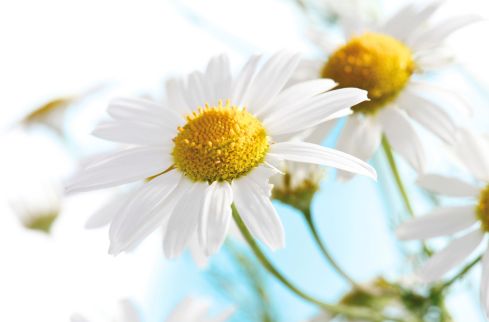
Herb: Chamomile

Latin Name: Matricaria Chamomilla

Family: Asteraceae/Compositae: Asteraceae is known as the aster, daisy, or sunflower family.

Varieties Most Utilized: German Chamomile (Chamomilla recutita) Roman Chamomile (Chameamelum nobile)
woman in chamomile field

History

Chamomile is considered one of the most ancient herbal medicines known to mankind. Due to its anti-inflammatory, antioxidant, antibacterial, and anti-anxiety therapeutic properties, modern-day science considers chamomile an herbal medicine of the past with a bright future. It is approved by Germany’s Commission E (a group of scientists, doctors, pharmacologists, and toxicologists) to treat coughs and bronchitis, fevers, colds, inflammation, infection, wounds, and burns. (1)

The use of Chamomile has been documented in ancient Egyptian, Greek, Roman, Indian, and Asian medical writings. As early as 500 BCE, documentation shows Hippocrates, “the father of medicine,” regularly used chamomile for its anti-inflammatory and calming effects to treat skin conditions such as erythema and xerosis. (2)

According to the American Botanical Council, a leading resource of science-based publications, and the Gale Encyclopedia of Alternative Medicine, chamomile has been used to treat over 50 health conditions in humans, including digestive issues, wound healing, hypertension, inflammatory bowel syndrome (IBS), menstrual conditions, attention-deficit/hyperactivity disorder (ADHD), acute respiratory infection, and asthma. (3)

Health Benefits of Chamomile

Of the many varieties of chamomiles, the two most commonly used are German Chamomile and Roman Chamomile. Both offer medicinal benefits and are often used interchangeably; however, they differ slightly in their chemical properties. (4)

German (Blue) Chamomile

German (Blue) Chamomile

Roman Chamomile

Chamomile essential oils are often used in aromatherapy
to improve mood and relieve stress.

Over 120 medicinal properties have been identified in chamomile. The most important therapeutic properties contributing to chamomile’s beneficial effects are terpenoids, such as chamazulene and bisabolol and flavonoids, including apigenin, luteolin, and quercetin. (12)

Chamomile’s effectiveness is due to its anti-inflammatory, antioxidant, antimicrobial, antinociceptive, analgesic, anxiolytic, sedative, and antispasmodic properties.

Some additional nutritional benefits, such as potassium, vitamin A, and vitamin B9, can be found in a cup of chamomile tea. (13)

How Chamomile Supports the Body

Chamomile contains terpenoids, flavonoids, and lactones, including matricin and apigenin, which have been found to stimulate gamma-aminobutyric acid (GABA), a naturally occurring amino acid that works as a neurotransmitter associated with stress reduction. (14)

Traditional herbalists have used chamomile to help calm people under stress because of its active ingredients, which stimulate the production of neurotransmitters associated with mood, such as serotonindopamine, and noradrenaline. Deficiency in these chemical compositions is linked to depression and anxiety. (15) (16)

Additionally, promising clinical research indicates chamomile’s ability to counteract allergies, insomnia, and anxiety associated with ADHD. These findings suggest the possibility of combining stimulant treatment with chamomile in order to give lower doses of pharmaceutical drugs. (17)
Chamomile improves hyperglycemia and diabetic complications by suppressing blood sugar levels and increasing liver glycogen. Studies further support its protective effect on pancreatic beta cells (endocrine cells that synthesize, store, and release insulin) by reducing hyperglycemia-related oxidative stress. (18) (19)

Chamomile has been shown to significantly improve carbohydrate digestion and sugar absorption in the gastrointestinal tract. In addition, due to its flavonoid content, chamomile has been shown to improve myocardial and high blood pressure conditions often associated with diabetes. (20) (21) (22)
A German study of people who had undergone dermabrasion for the removal of tattoos found that chamomile creams promoted faster wound healing than corticosteroids. (23)

Chamomile’s active anti-inflammatory, antioxidant, and antibacterial properties provide a calming and soothing effect on the skin while promoting tissue regeneration. As a result of these benefits, research confirms its effectiveness as an ingredient utilized in skin care products associated with anti-aging, baby creams, eczema, psoriasis, and acne. (24)

European countries and organizations, including the German Commission E, have approved the use of chamomile creams and essential oils for skin conditions resulting from certain types of bacteria, fungi, and viruses. (25) (26)
Digestion begins in the mouth, where common, yet painful ulcers known as recurrent aphthous stomatitis (RAS) can occur. Chamomile, used as a mouth rinse, has been proven to provide a safe and effective treatment for RAS by controlling pain and burning sensations without producing any adverse side effects compared to prescribed medications. (27) (28)

Thanks to chamomile’s anti-inflammatory, antispasmodic, and anti-bacterial properties, research finds the use of chamomile to be an effective treatment for numerous gastrointestinal conditions, including digestive disorders, colic, upset stomach, ulcers, irritable bowel syndrome (IBS), and gastroesophageal reflux disease (GERD). Additionally, chamomile can be more effective in inhibiting gastric acidity than commercial antacids. (29) (30) (31)
A recent study determined that cancer cells were more likely to die off when treated with chamomile extract, suggesting it can reduce cancer cell growth. (32)

Another study, supported by the National Cancer Institute, investigated a component of chamomile oil called apigenin. This study confirmed apigenin could inhibit the growth of and induce cell death in human cancer cells. (33)
Promising studies reported chamomile to be an effective treatment for chronic acute respiratory infections, whereby scientists agree there is a need for further research. (34)

Based upon Chamomile’s calming, sedative, and anticonvulsant (antiepileptic, antiseizure drug) effects, research supports its use as an effective and safe aid for sleep and insomnia conditions. (35)

How to Use Chamomile

Chamomile comes in different forms for both internal and external use.

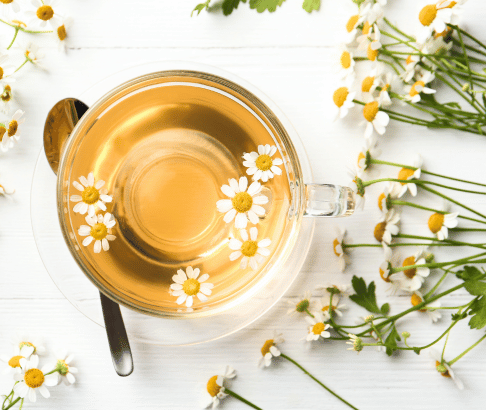
It is most often consumed as an herbal tea, but it also can be taken orally as drops, capsules, or tinctures; applied topically in creams, lotions, bath products, and compresses; or even inhaled as a vapor from steeping tea.

Chamomile essential oils are often used in aromatherapy to improve mood and relieve stress. The essential oils can be blended into massage oils, lotions, or creams, and applied to the skin. (36) (37)

When used in large dosages, chamomile may cause nausea or vomiting.

How to Use Chamomile

Chamomile comes in different forms for both internal and external use.

It is most often consumed as an herbal tea, but it also can be taken orally as drops, capsules, or tinctures; applied topically in creams, lotions, bath products, and compresses; or even inhaled as a vapor from steeping tea.
Chamomile essential oils are often used in aromatherapy to improve mood and relieve stress. The essential oils can be blended into massage oils, lotions, or creams, and applied to the skin. (36) (37)

When used in large dosages, chamomile may cause nausea or vomiting.

Contraindications

Although Roman chamomile is considered a mild herb and is relatively safe for most people, there are a few side effects and contraindications. It is recommended to consult with a trusted health care professional prior to using chamomile, especially if you: (38)

Final Thoughts

Chamomile flowers carry a symbolic meaning for rest, peace, poise, and calmness. It has been one of the most important medicinal herbs since ancient times, but ironically, it can be found growing near roads or landfills and is often mistaken as a weed. Given chamomile’s relaxing properties and fragrance, coupled with its beautiful daisy-like flowers and bright yellow centers, it is easy to see where its associations with the sun and positive energy come from.

In today’s busy world, where most people experience stress, anxiety, and depression, chamomile’s abundant soothing health benefits make it a perfect addition for physical, mental, and spiritual renewal. If you are not allergic to its bounty of goodness or taking medications that may have contraindications, enjoy a cup of chamomile tea or diffuse it as an essential oil. Cast your worries aside and stay feeling relaxed, knowing that a serene state of calm is always on the horizon. To your good health!

About the Author

M. Moriah Mor, ND, CHN, is a Naturopathic Practitioner, Certified Holistic Nutritionist, and founder of GreenSilk.com. She is dedicated to helping people live healthier lifestyles through education, nutrition, and premium natural health products. With more than 18 years in the wellness field, Moriah is a graduate of the Energetic Health Institute, AMCC, and the University of Southern California. She is passionate about researching the latest breakthroughs in holistic health.

M. Moriah Mor, ND, CHN, is a Naturopathic Practitioner, Certified Holistic Nutritionist, and founder of GreenSilk.com. She is dedicated to helping people live healthier lifestyles through education, nutrition, and premium natural health products. With more than 18 years in the wellness field, Moriah is a graduate of the Energetic Health Institute, AMCC, and the University of Southern California. She is passionate about researching the latest breakthroughs in holistic health.

Trusted. Tried. Approved.

Companies and products that we trust in our home and with our families.

Article Citations

  1. https://www.spandidos-publications.com/mmr/3/6/895
  2. http://abc.herbalgram.org/site/DocServer/CRCPRESSChamomile-Section_1.5978-1-4665-7759-6.pdf?docID=6362 
  3. http://abc.herbalgram.org/site/DocServer/CRCPRESSChamomile-Section_1.5978-1-4665-7759-6.pdf?docID=6362 
  4. http://www.ephysician.ir/index.php/browse-issues/2016/9/480-3024
  5. http://www.ephysician.ir/index.php/browse-issues/2016/9/480-3024
  6. https://www.spandidos-publications.com/ijmm/26/6/935
  7. https://www.spandidos-publications.com/mmr/3/6/895
  8. https://onlinelibrary.wiley.com/doi/10.1002/ptr.4753 
  9. https://www.journal-jop.org/journal/view.html?doi=10.3831/KPI.2019.22.028 
  10. https://www.drugs.com/npp/chamomile.html 
  11. https://www.sciencedirect.com/topics/agricultural-and-biological-sciences/chamomile 
  12. https://www.spandidos-publications.com/mmr/3/6/895
  13. https://nutritiondata.self.com/facts/beverages/4020/2
  14. https://www.sciencedirect.com/topics/agricultural-and-biological-sciences/chamomile
  15. https://www.spandidos-publications.com/mmr/3/6/895
  16. https://www.ncbi.nlm.nih.gov/pmc/articles/PMC3600408/
  17. https://go.gale.com/ps/i.do?p=AONE&u=googlescholar&id=GALE|A200253716&v=2.1&it=r&sid=AONE&asid=d711231a 
  18. https://www.spandidos-publications.com/mmr/3/6/895
  19. https://www.oatext.com/effects-of-chamomile-tea-on-inflammatory-markers-and-insulin-resistance-in-patients-with-type-2-diabetes-mellitus.php 
  20. https://www.spandidos-publications.com/mmr/3/6/895
  21. https://www.sciencedirect.com/topics/medicine-and-dentistry/chamomile 
  22. https://www.nature.com/articles/s41598-018-23736-1
  23. https://onlinelibrary.wiley.com/doi/10.1002/ptr.2612 
  24. https://www.sciencedirect.com/topics/agricultural-and-biological-sciences/chamomile 
  25. https://www.sciencedirect.com/topics/agricultural-and-biological-sciences/chamomile 
  26. http://www.eurekaselect.com/article/80691 
  27. https://www.niddk.nih.gov/health-information/digestive-diseases/digestive-system-how-it-works#:~:text=The%20digestive%20process%20starts%20in,down%20starches%20in%20your%20food
  28. http://www.medicinaoral.com/odo/volumenes/v6i5/jcedv6i5p535.pdf 
  29. https://www.spandidos-publications.com/mmr/3/6/895 
  30. https://www.sciencedirect.com/topics/agricultural-and-biological-sciences/chamomile 
  31. https://www.sciencedirect.com/topics/medicine-and-dentistry/chamomile 
  32. https://bmcresnotes.biomedcentral.com/articles/10.1186/s13104-018-3960-y 
  33. https://www.mdpi.com/2072-6643/11/4/858 
  34. https://www.sciencedirect.com/topics/medicine-and-dentistry/chamomile 
  35. https://www.sciencedirect.com/science/article/abs/pii/S0965229917302601?via%3Dihub 
  36. https://www.spandidos-publications.com/mmr/3/6/895 
  37. https://www.sciencedirect.com/topics/agricultural-and-biological-sciences/chamomile 
  38. https://www.webmd.com/diet/supplement-guide-chamomile
Minimize View More

DISCLAIMER & COMPLIANCE

***All Information Shared In This Article Is For Educational Purposes Only. All Statements Have Not Been Evaluated By The US Food and Drug Administration (FDA). Go Here For A Current List Of The FDA’s Position On Various Therapeutic Interventions. We Are Required To Inform You That Any Information Presented In This Article Is Not Intended To Advise, Diagnose, Treat, Cure, Or Prevent Any Disease Including COVID. Additionally, We Are Required To Inform You That Any Information Presented In This Article Is Not Intended To Constitute Legal Advice Or Service. Always Consult With Qualified Licensed Medical Professionals & Legal Experts Before Enacting Any Information Presented Herein.***

***Please Be Aware That At No Time Will EHI Offer Advice, Guidance, Or Direction With Respect To Whether Or Not An Individual Should Or Should Not Receive COVID Gene Modification Shots In Clinical Trial According To The National Institutes Of Health (NIH). We Encourage All People To Review Available Safety & Efficacy Data, Published By The CDC Through The Vaccine Adverse Events Reporting System (VAERS) And The CDC’s COVID Data Tracker, With Their Trusted Healthcare Team And Make The Decision That Is Right For Them. We Support Every Individual’s Rights As Patients To Agree To Or Decline Any Medical Procedure As Stated In The American Medical Association’s Code Of Medical Ethics 1.1.3(d).***

***In A Transparent Effort To Be In Full Compliance With The US Food and Drug Administration (FDA) and Federal Trade Commission (FTC) Regarding Prevention, Treatment, & Deceptive Practices (15 U.S. Code § 57b & Section 19 of the FTC Act), We Are Required To Notify You That The Information Presented In This Article Is A Collection Of Peer-Reviewed Empirical Evidence, But Has Not Yet Been Evaluated By The FDA For Safety & Efficacy. None Of The Information Provided Is Intended To Replace The Care And Supervision Of Qualified Licensed Medical Professionals Or The Legal Advice Of Licensed Attorneys.***